
Mechanical Scale vs Digital Scale: Total Cost of Ownership
Schedule a free consultation today. Compare the total cost of ownership for mechanical scale vs digital scale options for your commercial weighing application.
Selecting between a mechanical scale vs digital scale involves more than reading spec sheets and comparing sticker prices. Each technology carries a fundamentally different cost trajectory over its service life. Mechanical scales, built from cast iron and lever systems, typically serve commercial operations for decades with minimal intervention. Digital scales, driven by load cell sensors and microprocessors, deliver speed and data integration but often require replacement within five to ten years. Understanding these long-term cost implications matters more than the purchase price when the scale needs to earn its keep on a deli counter, bakery bench, or warehouse floor.
Ready to discuss the right scale for your operation? Call (215) 739-9644 to speak with a Penn Scale specialist.
Mechanical Scale Vs Digital Scale: How Mechanical and Digital Scales Work
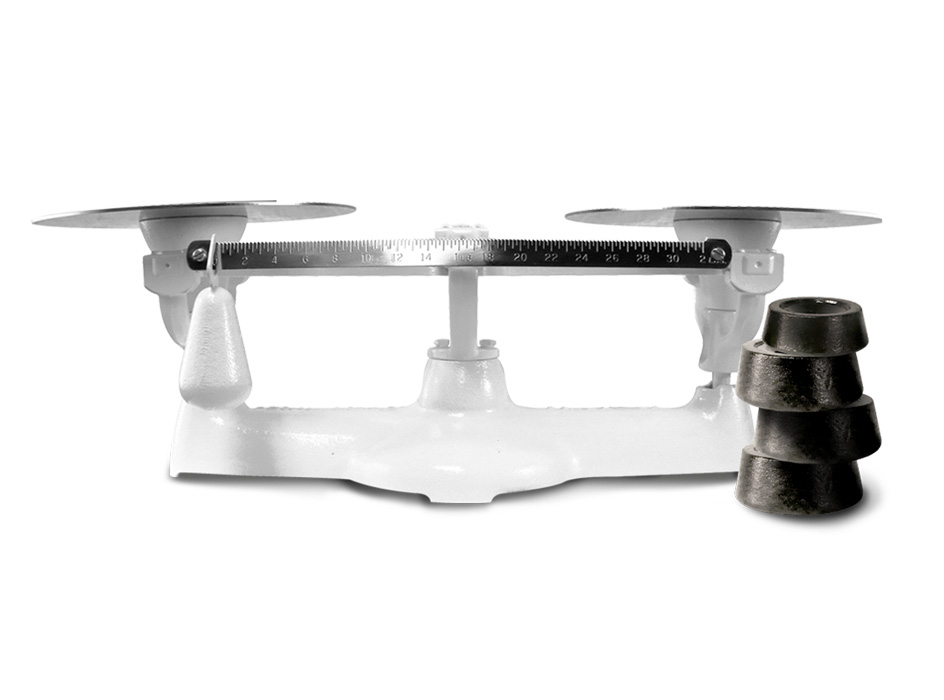
A mechanical scale measures weight through physical force transmission. When an object is placed on the platform, internal levers or springs deflect in proportion to the mass, and that deflection moves a pointer across a calibrated dial. The mechanical scale selection at Penn Scale includes spring-operated dial models and beam-balance designs, both of which require no electrical power to function. This mechanical simplicity means there are no circuit boards to short, no batteries to replace, and no sensors to drift out of specification.
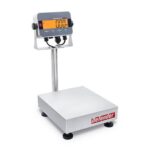
Digital scales rely on load cells, which are precision metal elements that deform microscopically under load. Strain gauges bonded to the load cell convert this deformation into an electrical signal that a microprocessor translates into a weight reading. Models like the SJ Series digital scale provide instant numeric readouts, unit conversion between pounds and kilograms, and connectivity for price computing or label printing. The trade-off is a more complex assembly with electronic components that are sensitive to moisture, temperature swings, and physical shock. Operators must also account for load cell drift over time, a gradual shift in accuracy that periodic calibration corrects.
Mechanical scales operate on springs and levers with no power source required, making them reliable in wet or dusty environments. Digital scales use load cell sensors and microprocessors for fast, precise readings and data connectivity. The internal mechanism directly affects the total cost of ownership because it determines maintenance frequency, expected service life, and environmental vulnerability.
Which Is More Accurate: Mechanical or Digital Scales?
Accuracy depends more on the scale’s design class and calibration regimen than on whether it uses a dial or a digital display. A properly maintained mechanical scale can deliver repeatable results within its specified tolerance for decades. NIST Handbook 44, which governs weighing devices used in commerce, sets the same accuracy class standards for both technologies. The difference emerges in how each type maintains that accuracy over months and years of daily use.
Neither technology is inherently more accurate at comparable price points. Digital scales offer higher readability and finer resolution on their displays, but mechanical scales hold calibration longer when properly maintained. The choice should be driven by your required division size and legal-for-trade classification, not by assumptions about digital superiority.
Digital scales eliminate parallax error, the visual misreading that can occur when reading a dial at an angle. They also self-correct for temperature-induced drift through internal compensation circuits. However, digital load cells are subject to creep, a slow deformation under constant load that can shift readings over extended periods. Mechanical scales, particularly beam-balance designs, do not experience electronic drift and maintain their reference point indefinitely as long as the pivots and bearings remain clean and lubricated.
For most commercial applications, both scale types can achieve the accuracy required for legal-for-trade weighing if they carry an active NTEP Certificate of Conformance. The decision between commercial digital food scales and mechanical alternatives should weigh the operator’s tolerance for periodic verification against the need for instant, unambiguous readouts. In a high-volume deli, the speed and pricing automation of a digital scale may justify the additional calibration overhead. In a laboratory or production environment where consistent readings across an eight-hour shift matter most, a mechanical scale’s immunity to sensor drift becomes a real advantage.
Breaking Down the Total Cost of Ownership
The total cost of ownership (TCO) for a commercial scale includes the purchase price, calibration and verification costs, repair parts, downtime losses, and the eventual replacement expense. Routine scale calibration schedules vary by state and application. But every scale used for trade must maintain an active NTEP certification and be tested by a registered service agent at intervals defined by local weights and measures authorities.
Mechanical scales deliver a lower TCO for most commercial applications due to longer service life, simpler maintenance, and no power-related expenses. Digital scales offer operational speed that may justify their higher lifecycle cost in high-volume retail environments where every transaction second counts.
| Cost Factor | Mechanical Scale | Digital Scale |
|---|---|---|
| Initial price range | Low to moderate | Moderate to high |
| Typical service life | 20 to 30+ years | 5 to 10 years |
| Annual calibration cost | Comparable | Comparable |
| Battery and electricity cost | None | Low but ongoing |
| Repair frequency | Very low | Moderate |
| Downtime risk | Low | Moderate |
| 10-year cost estimate | Lower | Higher |
The gap widens in demanding environments. A mechanical scale operating in a seafood market or commercial kitchen will not suffer moisture damage to internal electronics. While a digital unit in the same space may need frequent sensor replacements or protective enclosures. For operations that prioritize long-term predictability, mechanical scales offer a cost profile that is much easier to forecast. Penn Scale, serving industrial buyers since 1923, recommends evaluating total cost of ownership across the expected equipment lifecycle rather than optimizing for the lowest initial price.
Durability and Environmental Factors
The operating environment is often the deciding factor in the mechanical scale vs digital scale decision. Mechanical scales excel in harsh conditions because there are no sensitive electronic assemblies to protect. A cast-iron beam scale can withstand temperature swings, moisture, airborne flour dust, and the physical bumps that come with a busy commercial kitchen. The professional bakers scales category at Penn Scale includes mechanical models that have been trusted in commercial bakeries for generations specifically for this durability advantage.
Mechanical scales handle temperature extremes, moisture, and physical abuse better than digital models. Digital scales include temperature compensation that helps maintain accuracy across changing conditions but remain vulnerable to water ingress, radio frequency interference, and load cell creep.
Digital scales have a countervailing advantage in temperature-stable environments. Built-in temperature compensation circuits maintain accuracy across ambient shifts, making them reliable in bakeries where oven heat fluctuates or in cold storage rooms. They are also quieter during operation and provide backlit displays for low-light conditions. The floor scales vs pallet scales vs bench scales guide on the Penn Scale blog covers how different scale form factors handle various operating conditions.
Radio frequency interference is a documented concern for digital scales. Equipment such as two-way radios, nearby motors, or wireless transmitters can induce signal noise that causes the display to fluctuate or zero to drift. Mechanical scales are immune to this issue entirely. Facilities with heavy industrial equipment, proximity to broadcast antennas, or multiple wireless devices in close proximity should factor interference risk into their purchasing decision. For operations in wet environments such as fish processing, produce washing, or meat fabrication, the mechanical option eliminates the risk of electronic failure from moisture ingress.
Features That Drive Operational Value
The feature set of each scale type directly affects daily workflow efficiency. Digital scales provide speed and data capabilities that mechanical dials cannot match. Instant tare, unit switching, cumulative weighing, and digital output to printers or inventory systems are standard on most commercial digital models. The price computing scale vs label printing scale guide covers how digital connectivity enables different retail workflows, from simple price lookup to full label generation.
Digital scales offer faster weighments, data logging, and retail connectivity at the cost of more complex maintenance. Mechanical scales deliver quiet, power-free operation with lower repair frequency but lack data output and require manual reading. The right feature set depends on whether your operation prioritizes speed or simplicity.
Mechanical scales offer features that matter in specific settings. A dial display has no screen glare, making it readable in direct sunlight or under bright kitchen lights where an LCD might wash out. Mechanical scales produce no beeps or electronic sounds, preserving a quieter workspace. Most importantly, they function during power outages, an advantage in facilities where weighing must continue regardless of grid reliability. For applications like portion control in a bakery where the same ingredient is weighed repeatedly. A mechanical dial provides a clear visual reference that workers can read at a glance without touching the scale.
Digital scales shine in retail and distribution settings where speed and data matter. Price computing models automatically calculate totals based on programmed per-unit prices, reducing cashier error and shortening transaction times. Label printing scales produce itemized weight labels with barcode, price, and product description in a single operation. For operations that process hundreds of transactions per day, these features deliver labor savings that offset the scale’s higher purchase price and shorter service life.
How To Choose the Right Scale for Your Application
Selecting the right scale starts with three diagnostic questions about your operation.
- What is your environment? Dry, climate-controlled spaces with consistent temperatures can accommodate either technology, but wet, dusty, or extreme-temperature settings tilt toward mechanical.
- What throughput do you need? A deli slicing line that processes one order every 45 seconds benefits from digital speed and automatic price calculation. A bakery that weighs flour in 50-pound batches may find a mechanical beam scale faster to read and simpler to maintain.
- What is your required level of readability? Applications that require fine division sizes, such as precious metal weighing or pharmaceutical compounding, demand the higher resolution that digital displays provide.
Evaluate your environment, throughput requirements, and needed readability before choosing a scale type. Mechanical scales suit harsh environments and predictable workflows. Digital scales excel in fast-paced retail, temperature-controlled labs, and any application requiring data integration or fine readability.
For wholesale buyers who need guidance on matching equipment to application, Penn Scale provides consultative support that goes beyond a spec sheet. Understanding the mechanical scale vs digital scale decision means looking at your total cost picture, not just the first invoice. A mechanical scale built in Philadelphia can outlast several digital replacements while delivering consistent, NTEP-compliant weighing performance. For operations where data speed and connectivity drive revenue, a digital scale pays back its higher lifecycle cost through labor savings and inventory accuracy. The right choice depends on matching the equipment to your specific application, throughput volume, and environmental conditions. Each operation is different, and the optimal solution balances initial cost against the daily demands of your workflow.
Frequently Asked Questions
What lasts longer, a mechanical scale or a digital scale?
Mechanical scales typically last 20 to 30 years or more with basic maintenance, while digital scales generally require replacement within 5 to 10 years. The absence of electronic components and power requirements contributes to the longer service life of mechanical models.
Do digital scales need more calibration than mechanical scales?
Both types require regular calibration to maintain legal-for-trade compliance under NIST Handbook 44. Mechanical scales hold their calibration longer between adjustments, while digital load cells are more prone to drift from temperature changes and constant load. Annual verification by a registered service agent is recommended for both technologies.
Can a mechanical scale be used for legal-for-trade weighing?
Yes. Mechanical scales can be NTEP-certified and used for legal-for-trade weighing as long as they carry a valid Certificate of Conformance for their class and are maintained according to manufacturer specifications. The type of internal mechanism does not determine legal-for-trade eligibility; the scale’s design class and certification status do.
Not sure which scale fits your operation? Call (215) 739-9644 to talk through your requirements with a Penn Scale specialist.