
How to Choose the Right Heavy Duty Scale 1000 lbs
Find the best heavy duty scale 1000 lbs for your business. Learn what features matter, compare types, and get tips for choosing the right industrial scale.

The term “heavy-duty” means more than just high weight capacity. It signifies a commitment to durability and performance in tough conditions. When you see a heavy duty scale 1000 lbs, you should think about its construction: the reinforced steel frame, the thick platform, and the protected internal components that ensure it delivers accurate readings day after day. Unlike lighter scales that can falter under pressure, these instruments are engineered for the daily grind. In this guide, we’ll explore what truly makes a scale heavy-duty and break down the key features that contribute to its long-term reliability and value.
Key Takeaways
- Choose a scale that fits your process: The best scale integrates smoothly into how you already work. Consider if you need a floor scale for large pallets, a bench scale for countertop tasks, or a pallet jack scale to weigh items while moving them.
- Look beyond weight capacity: Key features determine a scale’s real-world performance. Consider the platform size for your typical items, stainless steel construction for easy cleaning, and “Legal for Trade” certification if you sell products based on weight.
- Invest in value over price: A higher price often reflects greater durability, specialized certifications, or advanced features. Define your essential needs first to find a reliable scale that fits your budget and will serve as a long-term tool for your business.
What Is a Heavy-Duty 1000 lb Scale?
A heavy-duty 1000 lb scale is a weighing instrument specifically designed to handle substantial loads up to 1000 pounds while maintaining accuracy and reliability. But the “heavy-duty” label signifies more than just high capacity. It points to the scale’s robust construction and its ability to perform consistently in demanding commercial or industrial settings. Think of it as the difference between a personal car and a commercial truck. While both can get you from point A to B, the truck is engineered for constant, heavy use and tough conditions. Similarly, these scales are built to withstand the daily grind of a busy warehouse, factory floor, or large-scale kitchen without faltering.
When your operations involve weighing bulk goods, large outgoing shipments, or heavy components, you need a scale that delivers precise measurements under pressure. These scales feature reinforced platforms and durable internal mechanisms to ensure you get a correct reading every time, which is critical for everything from cost control to regulatory compliance. They are the unsung heroes of many industries, quietly ensuring that inventory is correct, shipping costs are accurate, and production is consistent. We’ve seen firsthand how essential the right bench scales and other heavy-duty models are for a smooth workflow, which is why we’ve focused on providing dependable options for over a century.
What Makes Them “Heavy-Duty”?
The “heavy-duty” distinction comes down to materials and construction. These scales are typically built with rugged components like structural steel frames and thick, solid platforms, often topped with stainless steel for added durability and easy cleaning. This isn’t just for show; this robust build protects the sensitive internal load cells from damage due to accidental drops, impacts, or the general wear and tear of an industrial environment. Unlike lighter-duty scales, they are engineered to last for years in tough workplaces. This focus on durability is a core part of our philosophy, especially for our own line of Penn Scale products.
Key Industries and Applications
You’ll find heavy-duty 1000 lb scales in a surprisingly wide range of industries. In shipping and logistics, they are essential for weighing pallets and large packages to calculate freight costs accurately. Warehouses use them for inventory management and order fulfillment. Manufacturing facilities rely on them for quality control and weighing raw materials, while the agriculture sector uses them for everything from weighing feed to harvested crops. Even recycling centers, veterinary clinics, and construction sites depend on these scales for their daily operations. The common thread is the need to weigh large, heavy items quickly and accurately, a task for which our shop is fully equipped to handle.
Exploring the Types of 1000 lb Heavy-Duty Scales
When you need to weigh items up to 1000 pounds, you have a few excellent options. The right choice depends entirely on what you’re weighing and how your team works. Think about whether you need to weigh items on the ground, on a workbench, while they’re being lifted, or as they’re being moved. Each type of scale is designed for a specific workflow, so matching the scale to your process is the first step toward making a smart investment. Let’s walk through the most common types of heavy-duty scales so you can find the perfect fit for your business.
Floor Scales
Floor scales are the workhorses of many industrial environments. These are large, flat platforms that sit directly on the ground, designed to weigh oversized or extremely heavy items like pallets, crates, and bulk containers. Because you don’t have to lift anything high off the ground, they are a practical and safe choice for warehouses and shipping docks. You can simply move items onto the platform using a forklift or pallet jack. Many floor scales come in standard sizes, like 4 by 4 feet, providing a generous surface area for a wide range of industrial applications. They are an essential tool for any operation that handles large-volume logistics and needs reliable heavy-duty weighing solutions.
Bench Scales
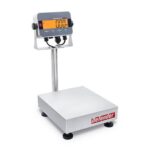
Don’t let the name fool you; bench scales are powerful tools built for serious work. While smaller than floor scales, they are designed to handle substantial weight on a workbench, counter, or dedicated stand. These scales are perfect for shipping stations, warehouses, and food production facilities where you need to weigh boxes, ingredients, or parts up to 1000 pounds. They often feature a durable stainless steel platform that stands up to tough conditions and is easy to clean. Their compact size makes them a versatile option for spaces where a large floor scale isn’t practical, giving you heavy-duty capacity without taking up valuable floor space.
Crane and Hanging Scales
When your workflow involves lifting heavy items, a crane scale is the most efficient tool for the job. Instead of placing an item on a platform, these scales weigh the load while it’s suspended from a crane, hoist, or other lifting equipment. This is incredibly useful in manufacturing, shipping, and metal fabrication, where you can capture a weight reading as part of your existing lifting process. It saves you the extra step of moving a heavy item to a separate scale. Crane scales are built for safety and accuracy, featuring a large, easy-to-read display and a sturdy hook that securely holds the load, streamlining your operations from above.
Pallet Jack Scales
For the ultimate in workflow efficiency, a pallet jack scale combines two essential warehouse tools into one. This device allows your team to weigh pallets at the same time they are being moved, completely eliminating the need to transport loads to a stationary floor scale. Imagine the time you’ll save by weighing incoming goods as you unload them from a truck or checking the weight of an outgoing shipment as you move it to the loading dock. This integration is a game-changer for busy warehouses, distribution centers, and any business focused on maximizing productivity. By capturing weight data on the move, you can speed up your entire process.
Weighing the Pros and Cons of Each Scale Type
Choosing the right type of heavy-duty scale isn’t just about finding one that can handle 1,000 pounds. It’s about understanding the trade-offs that come with each design and how they fit into your daily operations. The perfect scale for a bustling warehouse floor will be completely different from the one needed in a commercial kitchen or a shipping station. Making the wrong choice can lead to frustrating bottlenecks, inaccurate inventory counts, and even potential safety risks if a scale isn’t suited for its environment. Think about your workflow: are you weighing items as they come off a truck, portioning ingredients on a counter, or capturing weight as something is lifted by a hoist? Each scenario points to a different type of scale.
This decision impacts more than just your budget; it affects your team’s efficiency and the accuracy of your data. A scale that integrates smoothly into your process saves time and reduces manual effort, while one that creates extra steps can slow everything down. To make a smart investment, you need to look beyond the price tag and consider the specific pros and cons of each option. Let’s break down the most common types of heavy-duty scales so you can see which one truly aligns with the work you do every day. This will help you find a solution that not only meets your capacity needs but also supports a smoother, more productive business.
Floor Scales
Think of floor scales as the heavy lifters of the scale world. Their biggest advantage is their ability to weigh extremely heavy and bulky items directly on the ground, making them ideal for industrial settings. With large platforms, they can easily accommodate pallets, crates, and other oversized loads common in warehouses and shipping docks. The main trade-off is their footprint. Their size means they require significant floor space and can be a larger upfront investment. You also need to ensure they are placed on a perfectly level surface to get an accurate reading, which can sometimes be a challenge in older buildings or busy workshops.
Bench Scales
If you need a versatile workhorse for your countertop or shipping station, a bench scale is likely your best bet. These scales are perfect for weighing smaller packages, portioning bulk ingredients in a commercial kitchen, or handling parts in a workshop. Most are built with durable steel and feature a stainless steel top, which makes them tough enough for constant use and very easy to keep clean. Their primary limitation is, of course, their size and capacity. While they excel at handling smaller items with great precision, they simply aren’t designed for the oversized, heavy loads that a floor scale can manage.
Crane and Hanging Scales
Crane and hanging scales are all about efficiency in motion. They offer a unique solution for weighing items that are already being lifted, allowing you to capture a weight measurement while a product is suspended in the air. This is incredibly useful in manufacturing plants and warehouses where you’re constantly moving heavy materials with a hoist or crane. They are known for being highly accurate and reliable for these specific tasks. However, their application is quite specialized. If your workflow doesn’t involve lifting items, or if your products can’t be safely suspended, this type of scale won’t be a practical choice for your business.
Pallet Jack Scales
For the ultimate in workflow efficiency, pallet jack scales combine two essential warehouse tools into one. These clever devices allow you to move and weigh a palletized load at the same time, saving valuable minutes on every shipment you process or receive. This can dramatically streamline operations in a busy shipping and receiving area by eliminating the extra step of moving a pallet to a separate floor scale. The trade-off for this convenience is that they may not have the same high weight capacity as a dedicated floor scale. They also might not offer the same pinpoint precision for smaller, individual items.
Key Features to Look For in a Heavy-Duty Scale
Choosing the right heavy-duty scale comes down to more than just its weight capacity. The best scale for your business will have a specific combination of features that fit your unique needs, environment, and workflow. Let’s walk through the key details to consider so you can feel confident in your decision.
Accuracy and Legal-for-Trade Certification
If you sell products based on weight, this is the most important feature to get right. Scales used for commercial transactions must be “Legal for Trade,” which means they have been tested and certified to meet specific government standards for accuracy. Look for an “NTEP Certified” label. This certification ensures you are charging customers fairly and protecting your business from potential fines. Even if you aren’t selling by weight, a highly accurate scale provides reliable data for inventory management and portion control, making your operations more efficient. Many restaurant scales are designed with this certification in mind.
Platform Size and Material
Think about what you’ll be weighing most often. The scale’s platform needs to be large enough to fully support your items without them tipping or hanging off the edge, which can cause inaccurate readings. A common size for a versatile bench scale might be 24 by 24 inches, but you should measure your typical boxes or containers to be sure. The platform material is just as important. Stainless steel is a popular choice, especially in food service or messy environments, because it’s durable, resists corrosion, and is easy to clean and sanitize.
Display and Connectivity Options
You need to be able to read the weight quickly and clearly, even in a busy or poorly lit stockroom. Look for a large, backlit digital display, either LED or LCD. Some scales have a detached display that can be mounted on a wall or post for easier viewing at eye level. If your business relies on data tracking, consider a scale with connectivity options like a USB or RS-232 port. These features allow you to send weight data directly to a computer or printer, which helps reduce human error and streamlines your record-keeping. These functions are often managed by separate digital scale indicators.
Durability and Environmental Protection
A heavy-duty scale should live up to its name. Its construction determines how well it will hold up to the demands of your workplace. Look for frames made from thick structural steel or cast aluminum that can handle accidental bumps and heavy, repeated use. If the scale will be used in a damp or dusty environment, like a fish market or a grain processing facility, check its IP (Ingress Protection) rating. This rating tells you how well the scale is protected against water and dust, which is crucial for ensuring a long and reliable service life.
Portability and Power Source
Consider your daily workflow. Will the scale stay in one place, or will you need to move it around your facility? If you need portability, look for models with built-in wheels, handles, or a lower-profile design that makes them easier to transport. Also, check the power source. Many scales run on a standard AC adapter that plugs into the wall, which is perfect for a fixed station. If you need to weigh items away from an outlet, a scale with a rechargeable battery is essential. Make sure to check the battery’s expected life per charge.
Calibration and Maintenance Needs
Every precision instrument needs a tune-up, and scales are no exception. To maintain its accuracy, your scale will need to be calibrated regularly. Calibration is the process of checking and adjusting the scale against a known weight to ensure it provides correct readings. Some scales are easier to calibrate than others, but it’s a critical step for any business that relies on accurate measurements. Think of it as protecting your investment and your reputation. A company with a long history, like Penn Scale, understands the importance of building reliable products that are easy to maintain. You can learn more about our century-long commitment to quality on our About Us page.
A Look at Leading Heavy-Duty Scale Brands
When you’re investing in a piece of equipment as important as a heavy-duty scale, it helps to know the major players in the industry. Different brands have different strengths, from rugged durability to high-tech precision. As both a manufacturer of our own line and a master distributor for other top brands, we have a unique perspective on what makes each one stand out. Getting familiar with these names will help you narrow down your options and find the perfect fit for your business needs. Here’s a look at some of the most trusted brands you’ll encounter when searching for a 1000 lb heavy-duty scale.
Penn Scale
With a history stretching back to 1923, we know a thing or two about building scales that last. Our own line of Penn Scale products is known for being incredibly robust and reliable, especially in tough industrial and agricultural settings. We design our heavy-duty scales to handle harsh environments while delivering the accurate measurements your business depends on. Our commitment to quality and durability means you get a scale that’s built for demanding work, day in and day out. We combine time-tested manufacturing techniques with modern technology to create equipment you can truly count on for years to come.
Ohaus
Ohaus is a well-respected brand in the weighing industry, recognized for its dedication to precision and innovation. Their heavy-duty scales are engineered for exceptional accuracy, making them a top choice for industrial and even laboratory environments where exact measurements are critical. Ohaus often incorporates advanced technology into its designs, such as clear digital displays and connectivity options that make it easier to manage your data. If your work requires a high degree of precision or you want to integrate your scale with other systems, Ohaus offers sophisticated and durable solutions that can meet those needs.
Pennsylvania Scale
With a long history of manufacturing high-quality industrial scales, Pennsylvania Scale has earned a reputation for building equipment that is made to last. Their heavy-duty models are frequently used in demanding commercial and industrial applications, where they provide consistent and reliable performance. The company focuses on creating user-friendly designs paired with accurate readings, which is a huge plus for any business that needs precise weight measurements without a complicated setup. Their scales are straightforward, dependable, and built to withstand the rigors of a busy work environment, making them a solid choice for many businesses.
CAS
CAS is known for its innovative and practical weighing solutions, offering a range of heavy-duty scales that serve various industries. Their products are designed with the user in mind, often featuring easy-to-read displays and sturdy construction that can handle heavy use. Businesses often praise CAS scales for their consistent accuracy and reliability, making them a dependable option for weighing heavy items. If you’re looking for a scale that combines modern features with a strong, functional design, CAS provides excellent solutions that are both user-friendly and built to perform.
A&D Weighing
A&D Weighing offers a diverse selection of heavy-duty scales that are recognized for their precision and advanced technological features. Their scales are versatile enough for a wide variety of applications, from industrial settings to laboratory use. A&D Weighing places a strong emphasis on creating products that are both durable and highly accurate, ensuring they can meet the rigorous demands of any heavy-duty weighing task. For businesses that need cutting-edge technology without sacrificing toughness and reliability, A&D Weighing provides high-performance scales that deliver on all fronts.
Understanding the Price of a Heavy-Duty Scale
When you start shopping for a heavy-duty scale, you’ll notice the prices can vary quite a bit, from around $560 to well over $4,200. It’s easy to wonder why one scale costs so much more than another, but the price tag is a direct reflection of the scale’s capabilities, materials, and features. Think of it less as a simple purchase and more as an investment in your business operations. A higher price often comes with greater durability, higher accuracy, and specialized features designed for demanding environments.
Understanding these price tiers helps you find the sweet spot between your budget and your business needs. You don’t want to overspend on features you’ll never use, but you also don’t want to cut corners and end up with a scale that can’t handle your daily workflow. As both a manufacturer and a master distributor for top brands, we offer a comprehensive shop where you can see these differences firsthand. This guide will break down what you can expect at each price point, so you can feel confident you’re choosing the right tool for the job.
Entry-Level Options ($560–$1,000)
In the entry-level range, you’ll find solid, reliable scales perfect for basic weighing tasks or businesses with less frequent needs. These models are straightforward and get the job done without a lot of extra features. They are an excellent starting point if you’re working with a tighter budget or if your weighing tasks don’t require advanced data tracking or specialized certifications. While they may not have the robust, all-steel construction of their more expensive counterparts, a quality entry-level scale from a trusted brand is still built to provide accurate readings for years. These are great for general-purpose weighing in a workshop or a small shipping area.
Mid-Range Options ($1,000–$2,500)
This price range is the sweet spot for many businesses, offering a fantastic balance of durability, features, and cost. Mid-range scales are designed to be daily workhorses in busy environments like restaurants, commercial kitchens, and active warehouses. You’ll start to see more robust construction, such as stainless steel platforms, and more advanced digital scale indicators with brighter, easier-to-read displays. These scales often have larger platform sizes to accommodate bigger items and may include features like parts counting or dynamic weighing. If your business relies on a scale for daily operations, investing in a mid-range model is a smart move for long-term reliability.
Premium Options ($2,500–$4,200+)
Premium scales are built for the most demanding jobs where precision, durability, and specialized functions are non-negotiable. In this tier, you’ll find scales with advanced features like washdown protection for sanitary environments, intricate data connectivity for inventory management systems, and NTEP “Legal for Trade” certifications. These are essential if you’re pricing items by weight. Constructed from heavy-duty materials like structural steel, these scales are designed to withstand constant use, heavy impacts, and harsh conditions. If your operations require the highest level of accuracy or if the scale will be used in a challenging environment, a premium model is a worthwhile investment.
What’s Behind the Price Tag?
So, what exactly are you paying for as the price increases? It comes down to a few key factors. The construction material is a big one; scales made with structural steel or cast aluminum are built to last in tough industrial settings. Another major factor is certification. A scale that is “NTEP Approved” or “Legal for Trade” has undergone rigorous testing to meet strict accuracy standards for commercial use, adding to its cost and value. Finally, features like advanced displays, portability, and the reputation of the manufacturer, like our own Penn Scale line, all contribute to the final price.
Does a Higher Price Always Mean Better Quality?
It’s the classic question we ask before any big purchase: do I really get what I pay for? When it comes to heavy-duty scales, the answer is a solid “it depends.” A higher price tag often points to more advanced features, specialized materials, or certifications for legal trade, but it isn’t a simple measure of quality. The most expensive scale isn’t always the best one for your job.
Think of it this way: you wouldn’t buy a race car for a daily commute. The best scale is the one that reliably and accurately meets your specific needs without breaking your budget. A simple, durable scale might be perfect for one business, while another might require advanced connectivity to streamline its operations. Understanding when to invest and when to save is key to making a smart purchase that serves you well for years to come.
When to Invest in a Premium Scale
Investing in a premium scale is a strategic move when your daily work demands the highest level of performance. If you’re weighing items constantly throughout the day, a higher-end model built for intensive use will offer greater longevity. This is also true if your scale will live in a harsh environment, like a wet processing facility or a dusty warehouse, where superior sealing and corrosion-resistant materials are essential.
Furthermore, if your business sells products by weight, a “Legal for Trade” certification is non-negotiable, and these scales often fall into the premium category. Advanced features, such as sophisticated digital scale indicators that can log data or connect to printers and software, also justify a higher price by improving efficiency and record-keeping.
When an Entry-Level or Mid-Range Scale Is Enough
On the other hand, you don’t need to buy the most expensive model to get a reliable and accurate tool. An entry-level or mid-range scale is often the perfect solution for many applications. If you only need to weigh items occasionally for internal inventory checks, shipping, or portioning in a low-volume kitchen, a more basic model will perform beautifully. These scales are ideal for controlled, clean environments where they won’t be exposed to extreme temperatures or moisture.
Many affordable bench scales offer excellent accuracy for general-purpose tasks. As long as you purchase from a reputable manufacturer, you can trust that even a budget-friendly scale is built to provide dependable service. It’s all about matching the tool to the task at hand.
How to Choose the Right Scale for Your Business
Picking the right heavy-duty scale is about finding a partner for your daily operations. It’s not just about the maximum weight it can handle; it’s about finding a tool that fits your space, your products, and your process without a hitch. A scale that’s wrong for the job can slow you down, cause errors, and eat into your profits. Imagine trying to weigh large pallets on a small bench scale or using a delicate lab scale in a wet, messy environment. It just doesn’t work. The right scale, on the other hand, feels like a natural extension of your team, providing accurate data exactly when and where you need it. To make the best choice, you need to think through a few key aspects of your business. Let’s walk through the essential questions to ask yourself to ensure you invest in a scale that works as hard as you do.
Match the Scale to Your Workflow
First, think about what you’re weighing day in and day out. Make sure the scale can handle the heaviest weight you need to measure, but also consider the size and shape of your items. Are you weighing large, bulky boxes or small, dense parts? This will help you decide between a low-profile floor scale or a more compact bench scale. Consider the flow of your work. Do you need to weigh items as they come off a conveyor, or do you bring items to a central weighing station? The right scale should integrate smoothly into your existing process, not force you to create a new one.
Consider Your Work Environment
Your work environment plays a huge role in what kind of scale you need. Think about where the scale will be used. Is it a steamy kitchen, a dusty warehouse, or a wash-down area? Many scales are made with strong materials like structural steel or stainless steel to last a long time in tough work environments. For food service or wet conditions, you’ll want to look for a scale with a high IP rating for water resistance and easy-to-clean surfaces. Choosing a scale built for your specific conditions is the key to ensuring it remains accurate and reliable for years to come. Our selection of restaurant scales is a great example of models built for demanding settings.
Assess Your Data and Connectivity Needs
In many businesses, a scale’s job isn’t done once it shows a weight. Do you need to record that data, print a label, or send it to a computer? If so, you’ll need a scale with the right connectivity. Many digital models offer a connection port (like an RS-232) to link to a computer or printer, which is essential for inventory management, shipping, and quality control. Before you buy, think about how you’ll use the weight information. Having the right digital scale indicators can automate your data collection, reduce human error, and streamline your record-keeping.
Determine Your Portability and Power Needs
Finally, consider where your scale will live and how it will be powered. Will it stay in one dedicated spot, or do you need to move it around your facility? Many models are designed to be easily moved, with features like wheels, handles, or a lightweight build. If you don’t have a convenient outlet nearby or need to weigh in multiple locations, power flexibility is a must. Look for a scale that you can plug in or use with a rechargeable battery. This simple feature can make a world of difference in a busy, dynamic workspace, giving you the freedom to weigh items wherever you need to.
Finding the Best Value on Your Next Scale
Finding the right heavy-duty scale isn’t just about finding the lowest price. True value comes from getting a reliable, accurate tool that fits your budget and will last for years. It’s about making a smart investment in your business operations. So, how do you find that perfect balance of price, quality, and features? Let’s walk through how to get the best value on your next scale by focusing on where you buy, how you budget, and what makes a scale a worthwhile investment.
The Value of an Authorized Distributor
When you’re ready to buy, purchasing from an authorized distributor is one of the smartest moves you can make. These are sellers that have a direct, official relationship with the manufacturer. This means you get more than just a scale; you get peace of mind. An authorized distributor provides expert guidance to help you choose the right model, ensuring you don’t overspend on features you don’t need. You’re also guaranteed an authentic product backed by a full manufacturer’s warranty. As a family-owned company and master distributor for over a century, we understand the importance of this trust and offer a curated selection of scales from leading brands.
Smart Ways to Maximize Your Budget
Maximizing your budget doesn’t mean automatically picking the cheapest option. It means being strategic. First, always check for shipping deals. Many suppliers offer free shipping, especially for business addresses, which can save you a significant amount on a heavy item. Next, think about the total cost of ownership. A durable, well-made scale might have a higher upfront cost but can save you money on repairs and replacements over time. Finally, be realistic about your needs. While high-tech features are great, don’t pay for bells and whistles you won’t use. Focus on finding a scale that perfectly matches your current workflow and budget from a trusted supplier.
Getting the Most for Your Investment
A scale is an investment in your business’s efficiency and accuracy. To get the best return, make sure the scale you choose is up to the task. Start by confirming its capacity and precision. The scale must be able to handle your heaviest items while being precise enough for your specific application, whether it’s for portioning ingredients or calculating shipping costs. Consider versatility as well. A multi-purpose bench scale that can handle various tasks might be a better investment than a specialized scale you only use occasionally. Ultimately, the best investment is a durable, reliable scale that seamlessly fits into your daily operations and supports your business for years to come.
Related Articles
Frequently Asked Questions
Do I really need a “Legal for Trade” scale? If your business sells any product based on its weight, the answer is yes. A “Legal for Trade” or “NTEP Certified” scale has been rigorously tested to meet government standards for accuracy. Using one is a legal requirement that ensures you are charging your customers fairly, which protects both your reputation and your business from potential fines. If you only use a scale for internal tasks like checking inventory or portioning ingredients for a recipe, you don’t need this certification.
How often should I calibrate my heavy-duty scale? To ensure your scale remains accurate, regular calibration is essential. The ideal frequency depends on how often you use the scale and your work environment. For general use, an annual professional calibration is a good rule of thumb. However, if the scale is used constantly throughout the day or in a harsh environment with temperature swings or vibrations, you may need to calibrate it more frequently, perhaps quarterly or even monthly. Always check the manufacturer’s recommendation for your specific model.
What does an IP rating mean, and why should I care? An IP, or Ingress Protection, rating tells you how well a scale’s internal components are sealed against dust and water. The rating is made of two numbers: the first indicates protection against solids like dust, and the second indicates protection against liquids. A higher number means better protection. This is incredibly important if your scale will be used in a messy, wet, or dusty setting, such as a commercial kitchen, fish market, or industrial workshop. A good IP rating ensures your investment will last longer and remain reliable.
Can I use one type of scale, like a floor scale, for all my weighing needs? While it might seem efficient to buy one large scale for everything, it’s not a practical approach. Each scale type is designed for a specific purpose. Using a large floor scale to weigh a small five-pound box can be inefficient and may not provide the precision you need. Likewise, trying to weigh a heavy, oversized crate on a small bench scale is unsafe and will likely damage the scale. Matching the scale type to your workflow and the items you weigh most often will give you far better results.
Besides weight capacity, what’s the most important thing to consider when choosing a scale? After you’ve confirmed the scale can handle your required weight, the most important factor is your work environment. Think honestly about where the scale will live. Is the area frequently wet or humid? Is it dusty? Will it be subject to bumps and impacts? The answers to these questions will guide your decision on everything from platform material, like stainless steel, to the need for a specific IP rating for washdown protection. A scale built for your specific environment will always be a better long-term investment.